How Children Learn to Talk: A Parent’s Guide to Expressive Language Development
Every parent remembers the joy of hearing their child’s first “mama” or “dada.” Those babbling sounds may seem like playful nonsense, but they’re actually the very first steps in learning to talk. This early stage marks the beginning of expressive language development which is how children learn to share their thoughts, feelings, and ideas with the world.
Understanding how talking develops, and knowing when to seek extra support, can give you confidence as you guide your child through these exciting stages.
What Is Expressive Language?
Expressive language is how children communicate their thoughts and ideas with others. This can happen through:
Spoken words and sentences
Gestures and signs
Augmentative and Alternative Communication (AAC)
Every child develops expressive language at their own pace, but milestones and averages help us understand what’s typical and when support may be needed.
Milestones vs. Averages: What Parents Should Know
When speech pathologists look at expressive language, we use both:
Milestones: what around 90% of children can do by a certain age
Averages: what around 50% of children can do by a certain age
Both are important. If your child is close to milestones but not quite there, we often watch and wait for steady progress. If they’re well below average, it may be time to check in and consider early intervention.
Expressive Language Milestones Over Time
Here’s a snapshot of what talking can look like in the early years:
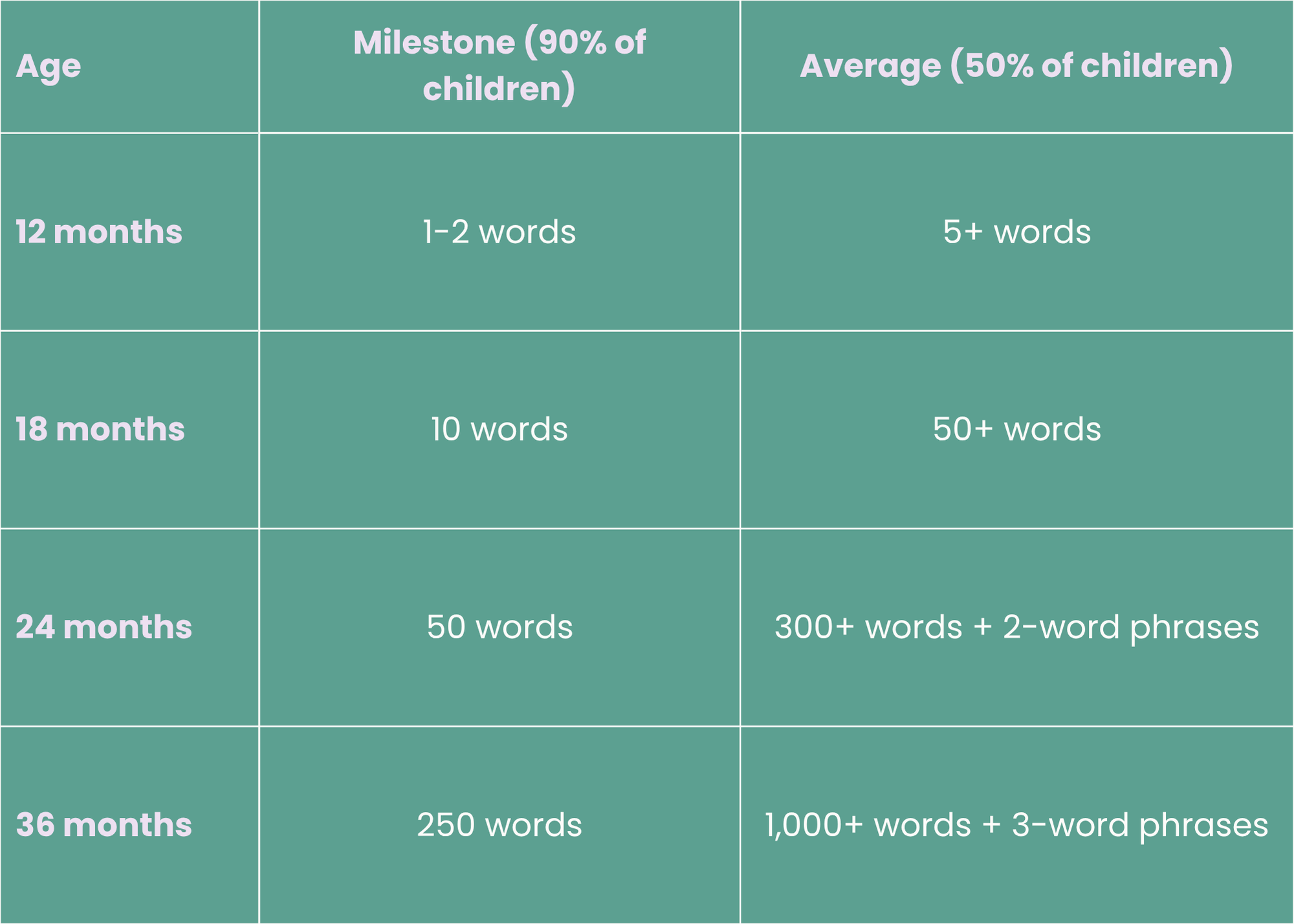
Remember: these numbers are guides, not strict rules. Some children talk earlier, while others take more time.
When to Seek Extra Support
Some children find talking more challenging. This can be due to:
Hearing difficulties (often from recurring ear infections)
Developmental differences, such as autism or developmental language disorder
Fewer opportunities to hear and practise language through play, conversation, or books
Some “late talkers” catch up naturally, while others benefit from extra support to keep development on track.
Practical Tips to Encourage Talking at Home
The best way to support your child’s language is through everyday interactions. Try:
Expand on their words: If they say “dog,” you can say, “Yes, the big fluffy dog!”
Narrate your routines: Talk about what you’re doing as you cook, tidy, or drive.
Read together: Comment on pictures and pause to let your child respond.
Pretend play: Role-play with dolls, animals, or cars to grow vocabulary.
Pause and wait: Give your child time to respond. Silence can encourage speech!
In Summary
If you’re wondering, “Is my child talking enough for their age?” you’re not alone. It’s one of the most common questions parents ask. It’s important to remember that expressive language grows step by step. If you’re unsure, even just for peace of mind, a speech pathologist can help. Our speech therapy for children is tailored to each child’s unique communication profile.
At Better Together Therapy, we work alongside families to support children’s communication skills, celebrate progress, and provide guidance when extra help is needed.