
Cognitive Assessments
Wechsler-based cognitive assessments for children, teens and adults. A broader picture of how you (or your child) think, learn and process information, beyond just an IQ score.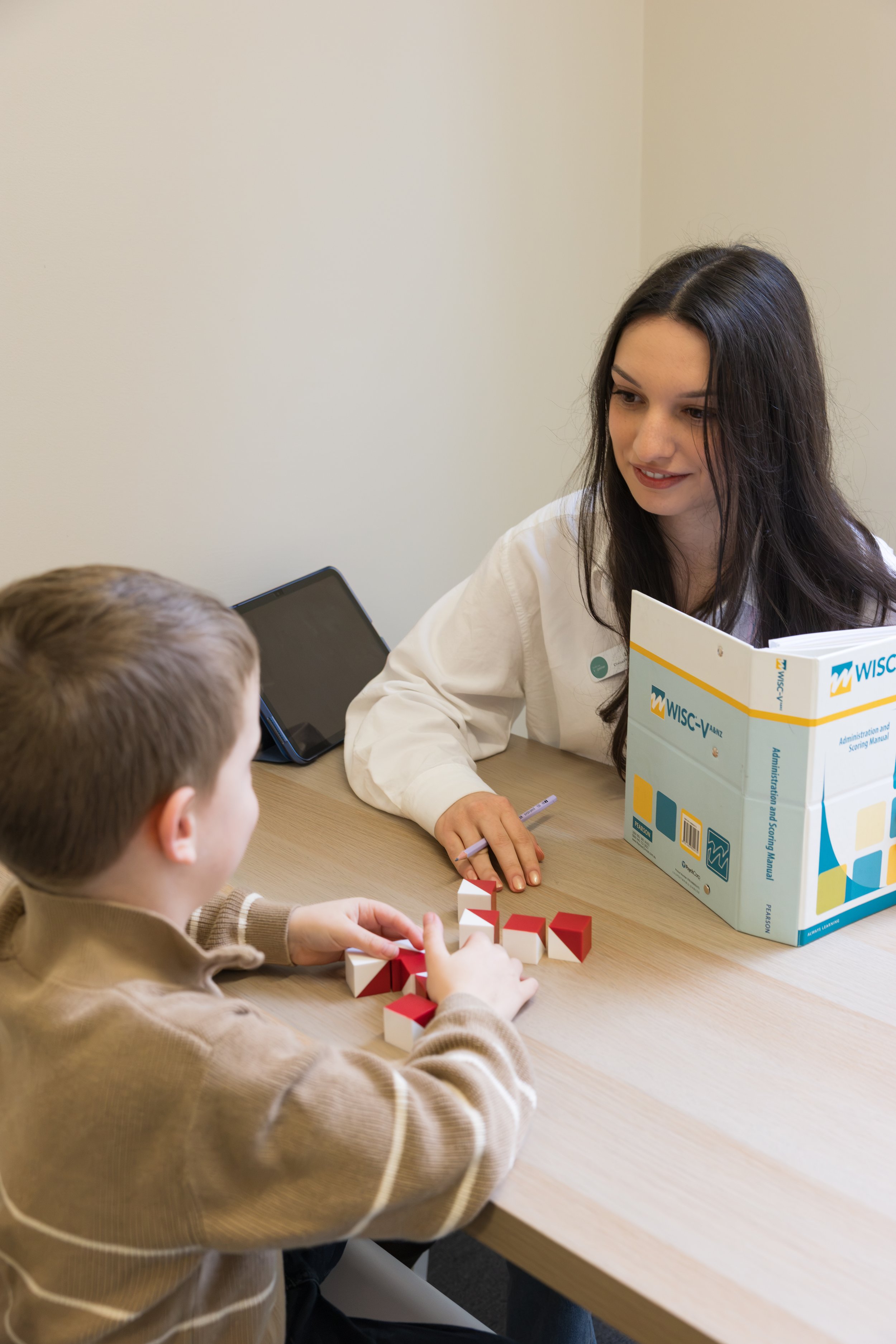
At Better Together Therapy, we provide comprehensive cognitive assessments for children, teens and adults. Cognitive assessments give a deeper understanding of how a person thinks, learns, processes information, solves problems, remembers and approaches tasks. They can help identify learning profiles, cognitive strengths, processing differences, intellectual functioning, giftedness, and areas where additional support may be helpful.
Our goal is to provide meaningful, practical insight that helps individuals, families, schools and other professionals better understand how someone learns and functions, day to day.
Why might someone seek a cognitive assessment?
People come to us for many different reasons. Some of the patterns we hear most often:
learning difficulties
uneven academic performance
difficulty processing information
attention or memory concerns
school-related stress or frustration
giftedness queries
difficulty understanding learning needs
concerns about intellectual functioning
challenges with problem-solving or processing speed
difficulty understanding why learning feels harder than expected
Assessments can provide clarity around cognitive strengths, learning differences and support needs.

Our cognitive assessment process
We aim to make the process supportive, clear and manageable.
Initial intake.
A conversation to explore current concerns, learning history, day-to-day functioning and the goals of the assessment.
Clinical interview and background information.
We gather developmental, educational, emotional and academic information to build a comprehensive picture of the individual's learning profile and daily functioning.
Assessment sessions.
Sessions may include cognitive testing, standardised assessment tools (such as the Wechsler Scales), observations and questionnaires where relevant. Approaches are tailored to age, concerns and support needs.
Collaborative feedback.
A supportive feedback session to discuss findings, answer questions and help you understand the results in a practical, accessible way.
Comprehensive report.
A detailed written report covering cognitive profile findings, strengths and support needs, processing considerations, learning recommendations and educational accommodations where appropriate.
More than an IQ score
A cognitive assessment is not simply an IQ test. It's a broader look at how someone processes information, approaches learning, and experiences cognitive demands across environments.
Adults and teens may notice
That broader picture can support:
• educational planning and learning accommodations
• understanding why some tasks feel easier or harder than others
• identifying processing differences alongside processing strengths
• emotional wellbeing (self-understanding helps with confidence)
• planning for enrichment and challenge for gifted learners
• support around school transitions, university applications or workplace adjustments
Cognitive assessments are also useful as part of broader assessment processes (autism, ADHD, learning disorders) where understanding cognitive profile adds important context.

Frequently Asked Questions
-
Cognitive assessments can provide useful information about attention, processing and learning profiles, but additional assessment processes are required for autism or ADHD diagnosis.
-
Yes. Cognitive assessments can help identify areas of cognitive strength, including giftedness. If your child is performing significantly above same-age peers, an assessment can help schools and families plan for appropriate challenge and enrichment.
-
For children and teens, we primarily use the Wechsler Intelligence Scale for Children, Fifth Edition (WISC-V). For adults, we use the Wechsler Adult Intelligence Scale (WAIS). The specific battery is tailored to the individual and the questions we're trying to answer.
-
Yes. A comprehensive written report and recommendations are included as part of every assessment.
-
Yes. Cognitive assessments are available for children, teens and adults.
Related Services
Educational Assessments
Often paired with cognitive testing when learning differences are part of the picture.
Autism Assessments
Cognitive assessment may form part of a broader autism assessment process.
Child psychology support
Ongoing therapy for school anxiety, confidence, neurodivergence and learning-related stress.
Ready to start the conversation?
Book a free 15-minute consultation. We'll talk through what you're looking for, answer your questions, and help you decide if a cognitive assessment is the right fit.