
Child Psychology
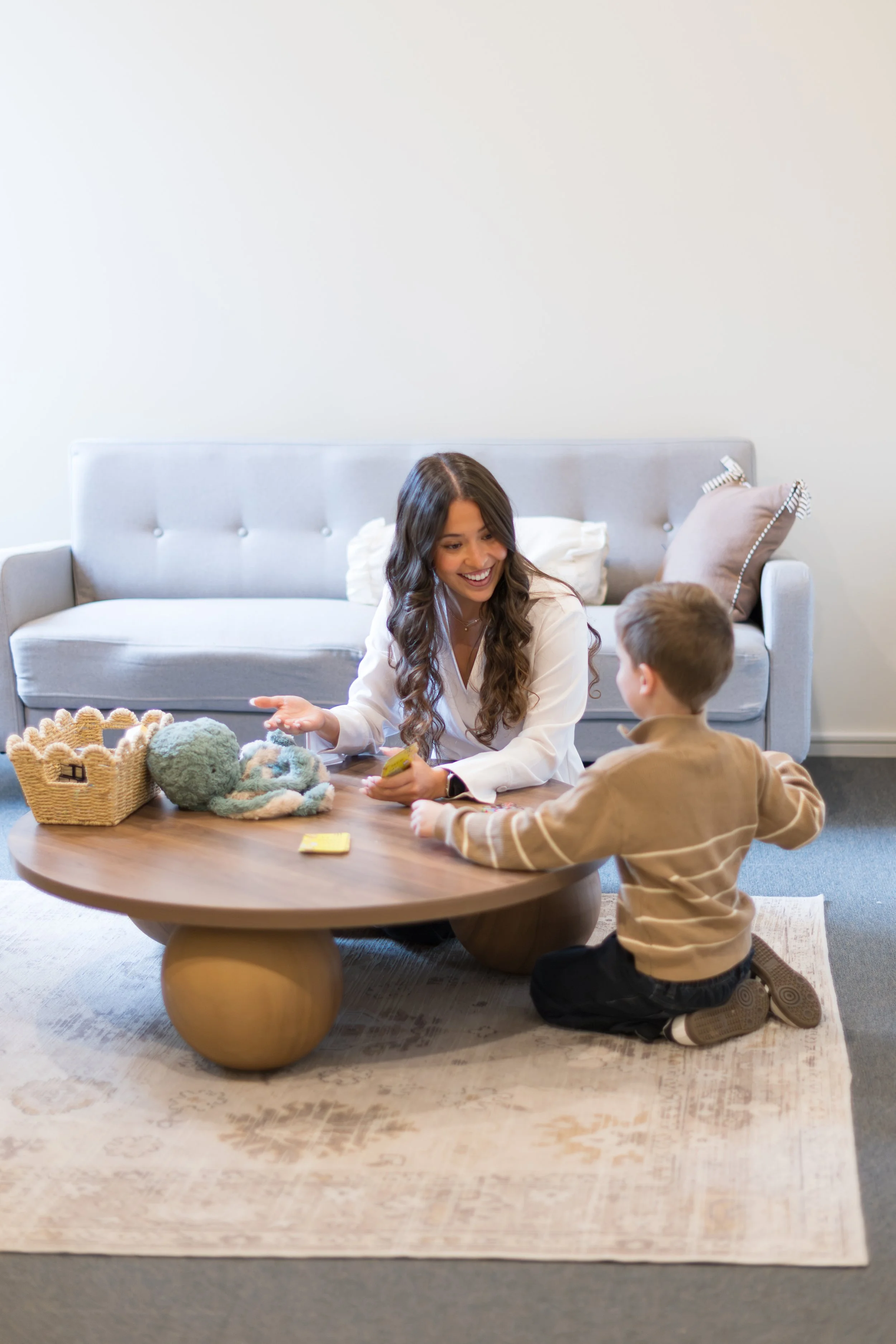
When your child is having a hard time, it can be difficult to know what they need or how best to help. Our child psychologists work with children in ways that feel safe, engaging and suited to who they are, while supporting parents along the way. Appointments are available at our Essendon psychology clinic or via telehealth across Australia.
At Better Together Therapy, we provide neuroaffirming, trauma-informed psychology support for children and families in Essendon and via telehealth. Our psychologists create a warm, engaging space where children feel safe to connect, explore and express themselves. Sessions may incorporate games, play-based approaches and creative activities, so children can build emotional understanding, confidence and practical coping strategies in ways that feel natural and engaging.

Parents and caregivers are part of the process
We recognise that parents are an important part of how children grow and heal. Parent involvement is welcomed throughout therapy and can include parent collaboration in sessions, parent-only sessions, and communication with schools or other professionals where appropriate.
How we support children
-
Including separation anxiety, social anxiety, phobias, obsessive-compulsive difficulties (OCD), school-related anxiety, excessive worries and perfectionism. Some children experience persistent worries, physical symptoms of anxiety, difficulty separating from caregivers, or significant distress around school, friendships or everyday situations.
-
We provide neuroaffirming support for autistic, ADHD and otherwise neurodivergent children. This can include emotional regulation, executive functioning support, social communication, self-understanding, confidence and school-related support.
-
We support children experiencing school anxiety, emotional distress around school, difficulty separating from caregivers, overwhelm within learning environments and emotional shutdowns or behavioural distress related to school.
-
Some children experience emotions very intensely and may struggle with frustration, impulsivity, emotional overwhelm, shutdowns or behavioural outbursts. Therapy can support children to understand emotions, recognise body cues, strengthen coping strategies, improve communication and build emotional awareness.
-
Some children benefit from support navigating friendships, social confidence, peer conflict, emotional understanding and social communication.
-
Children can be affected by trauma, stressful experiences, bullying, grief, family conflict, medical experiences or emotionally overwhelming environments. Therapy aims to provide a safe, supportive space to process emotions and strengthen emotional wellbeing.
-
Some children experience sadness, withdrawal, irritability, low confidence, emotional shutdown or reduced motivation. Therapy can support children in understanding emotions and strengthening coping strategies.
-
Some children experience anxiety, sensory challenges, rigidity or emotional distress related to food and eating. Support can include emotional wellbeing around food, ARFID presentations, body image concerns, anxiety related to eating, and collaborative family support.
-
Major family transitions can feel confusing and emotionally overwhelming for children. Therapy can support children navigating parental separation, blended family changes, grief and loss, and emotional adjustment during transitions.
Therapeutic approaches
Our psychologists draw on a range of evidence-based approaches depending on your child's age, needs and goals. These can include:
Cognitive Behaviour Therapy (CBT)
Acceptance and Commitment Therapy (ACT)
Play-based approaches
Emotional regulation strategies
Neuroaffirming approaches
Trauma-informed support
Parent and caregiver collaboration

Frequently Asked Questions
-
Parent involvement depends on your child's age, needs and the goals of therapy. For younger children, sessions often involve parent collaboration and support. For older children, your psychologist may spend time individually with your child while still working collaboratively with you where appropriate.
-
No. Children don't need a formal diagnosis to access psychology support. We work with children experiencing emotional, behavioural, social, learning or regulation difficulties regardless of whether a diagnosis is in place.
-
Yes. We support children experiencing school anxiety, school refusal, emotional overwhelm at school, learning-related stress, friendship difficulties and emotional regulation challenges within educational environments.
-
Yes. Telehealth sessions are available where appropriate and can provide flexibility for families who prefer support from home.
-
Yes. Supporting parents is often an important part of the therapeutic process. This can include helping you better understand emotions, behaviour, nervous-system needs, communication and regulation strategies at home.
-
Yes. We provide a range of psychological assessments including autism, ADHD, cognitive and educational assessments.
Related Services
Autism and ADHD Assessments
Neuroaffirming assessments for children where you're exploring a diagnosis or wanting to better understand your child's profile.
Educational Assessments
For learning differences such as dyslexia, dysgraphia and dyscalculia.
Speech Pathology
Communication, language, literacy and social communication support for children.
Ready to start the conversation?
Book a free 15-minute chat with our team. We'll talk through what's going on for your child, answer your questions, and help you find a therapist who fits.