
Specific Learning Disorder Assessments
Dyslexia, dysgraphia and dyscalculia assessments for children, teens and adults. Understand your learning profile, identify what’s getting in the way, and get clear recommendations for what can help.

At Better Together Therapy, we provide comprehensive Specific Learning Disorder (SLD) assessments for children, teens and adults across Melbourne. Learning differences can affect reading, writing, spelling, mathematics, processing speed and academic confidence in many different ways. Many people experience ongoing frustration, anxiety, school stress or self-esteem difficulties when learning feels significantly harder than expected, despite effort and support.
Our assessment process aims to identify learning profiles, clarify support needs and provide practical recommendations that help you (or your child) better understand how you learn.
What is a Specific Learning Disorder?
Specific Learning Disorders (SLDs) are neurodevelopmental differences that affect specific areas of academic learning. They can occur across a range of intellectual abilities and are not a reflection of intelligence, effort or motivation.
Dyslexia (reading and literacy)
Difficulties with reading accuracy, fluency or reading comprehension. May also affect spelling and written expression.
Dsygraphia (written expression)
Difficulties with handwriting, spelling, written organisation and putting thoughts on the page.
Dyscalculia (mathematics)
Difficulties with number sense, arithmetic, mathematical reasoning or mathematical fluency.
Why might someone seek an SLD assessment?
Families and individuals may notice:
difficulty learning to read
ongoing spelling difficulties
slow or effortful reading
difficulty understanding written information
writing and written expression challenges
mathematics difficulties
frustration or anxiety around schoolwork
inconsistent academic performance
difficulties despite appropriate support and intervention
low confidence related to learning
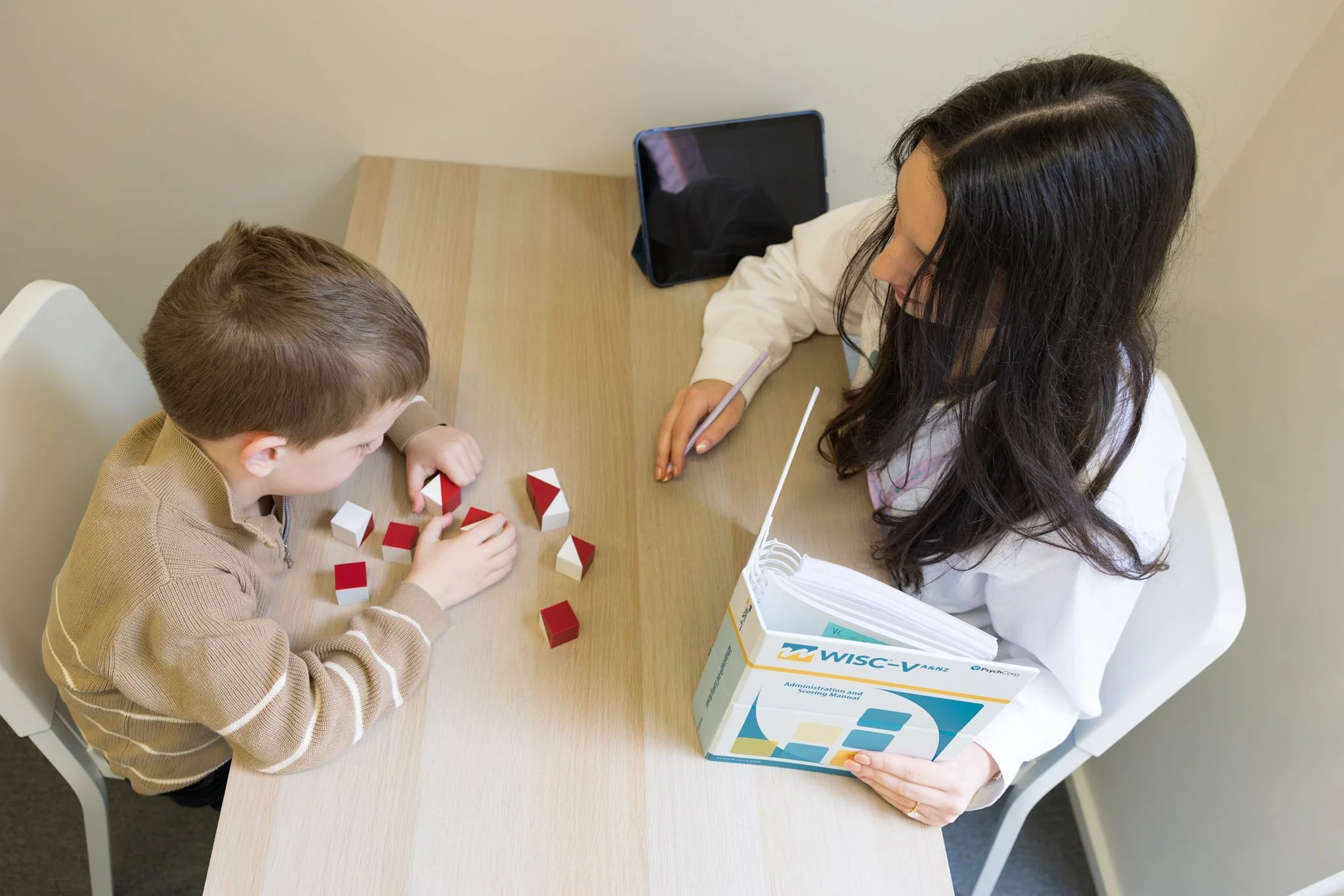
Assessments can help provide clarity around learning profiles and support needs while helping schools and families better understand how to support the individual.
Our learning disorder assessment process
We aim to make the process supportive, clear and manageable. Here's how it works.
Initial intake.
A conversation to explore learning concerns, academic history, day-to-day functioning and the goals of the assessment.
Clinical interview and background information.
We gather developmental, educational, emotional and academic information to build a comprehensive picture. School reports or educational information may be reviewed where appropriate.
Assessment sessions.
Sessions may include cognitive testing (such as the WISC-V), academic achievement testing (such as the WIAT-III), literacy and numeracy assessment, observations and questionnaires. Tailored to age and presentation.
Collaborative feedback.
A supportive feedback session to discuss findings, answer questions and help you understand the assessment outcomes in a practical, accessible way.
Comprehensive report.
A detailed written report covering assessment findings, learning profile information, diagnostic clarification where appropriate, educational recommendations, school accommodations and practical strategies.

Practical recommendations for school
Our SLD reports include specific, actionable accommodations for school environments. Adjustments to instruction, assessment, classroom supports and homework planning, written in language that teachers and learning support coordinators can use directly. Parents tell us this is what makes the difference between a diagnosis on paper and meaningful change at school.
Supporting learning and emotional wellbeing
Learning difficulties affect more than academics. Many people experiencing learning challenges also experience frustration, anxiety, school avoidance, low self-confidence, emotional overwhelm and a sense of falling behind their peers.
Our goal is to help individuals better understand their learning profile while supporting confidence, self-understanding and access to appropriate supports. Where ongoing therapy is helpful, our psychology team can continue working with you (or your child) beyond the assessment.
Frequently Asked Questions
-
Yes. Assessments can help identify Specific Learning Disorders affecting reading, writing or mathematics.
-
Yes. Recommendations can support educational planning, accommodations and learning supports. Our reports are written in language schools can act on directly.
-
Yes. A comprehensive written report and recommendations are included as part of every assessment.
-
Yes. Learning assessments are available for children, teens and adults.
-
A cognitive assessment looks at how someone thinks and processes information. An SLD assessment looks at specific areas of academic learning (reading, writing, mathematics) and is usually completed together with cognitive testing to understand the full picture.
Related Services
Cognitive Assessments
Usually completed together with educational assessment to understand the full learning profile.
Child psychology support
Therapy for school anxiety, confidence and emotional wellbeing alongside learning support.
Speech pathology
Literacy support and phonological awareness work for children with reading and language difficulties.
Free assessment consultation
Book a free 15-minute consultation. We'll talk through what you're looking for, answer your questions, and help you decide if an educational assessment is the right fit.